
An older member walks into a strength class and gets handed the lightest dumbbells before the coach has asked a single question. No training history. No conversation about goals. Just an assumption about what someone that age can do.
That is the programming problem worth fixing. If your default class is built around younger members and everyone else gets a watered-down version, you have not built an offering for older adults. You have built a workaround.
The older members are there, paying dues, showing up, and figuring it out on their own.
A considered offering gives older members a reason to train: strength they can use, movements they can improve and a coach who expects progress. That can happen in a dedicated group or across the main schedule.
Here’s what separates those operators from the ones who are leaving this on the table.
The Problem With “Senior Fitness”
Most operators who try to serve older members make the same mistake: they build programming that signals limitation rather than capability.
A dedicated older-adult track or chair-based class can be exactly what participants want and need. The mistake is making it the only option before asking them. Someone looking for progressive strength training should not have to choose between an unsuitable general class and a gentler format they never asked for.
The issue isn’t what’s in the class. Chair yoga is genuinely useful. The issue is the framing and the isolation. When the entire offering for older members is quarantined into its own corner of the schedule, it communicates something about how the facility views those members.
Build a route into the wider program for members who want it. A gym that has genuinely good programming for people in their 50s, 60s, and 70s doesn’t necessarily have a separate track. It has coaches who know how to coach people across a real age and ability range, programming that addresses what this demographic actually needs, and a culture where showing up at 62 or 68 or 74 isn’t a footnote.
What Older Members Actually Need (That Most Programming Skips)
Age-related changes matter, but their effect varies with training history and health. The CDC’s guidance for adults 65 and older calls for aerobic, muscle-strengthening and balance activity. A class offering should help members cover that range at an effort appropriate to them.
Power, not just strength. Strength is the ability to produce force; power adds the speed of that effort. Both decline with age, with power tending to decline faster, as described in this review of strength and power in older adults. That makes power worth considering alongside slow, controlled strength work. For a member who is ready, a coach might progress a familiar sit-to-stand or light medicine-ball movement with a quicker effort and a controlled return. Choose the movement and load from what the person can manage, rather than adding jumps to every older-adult class.
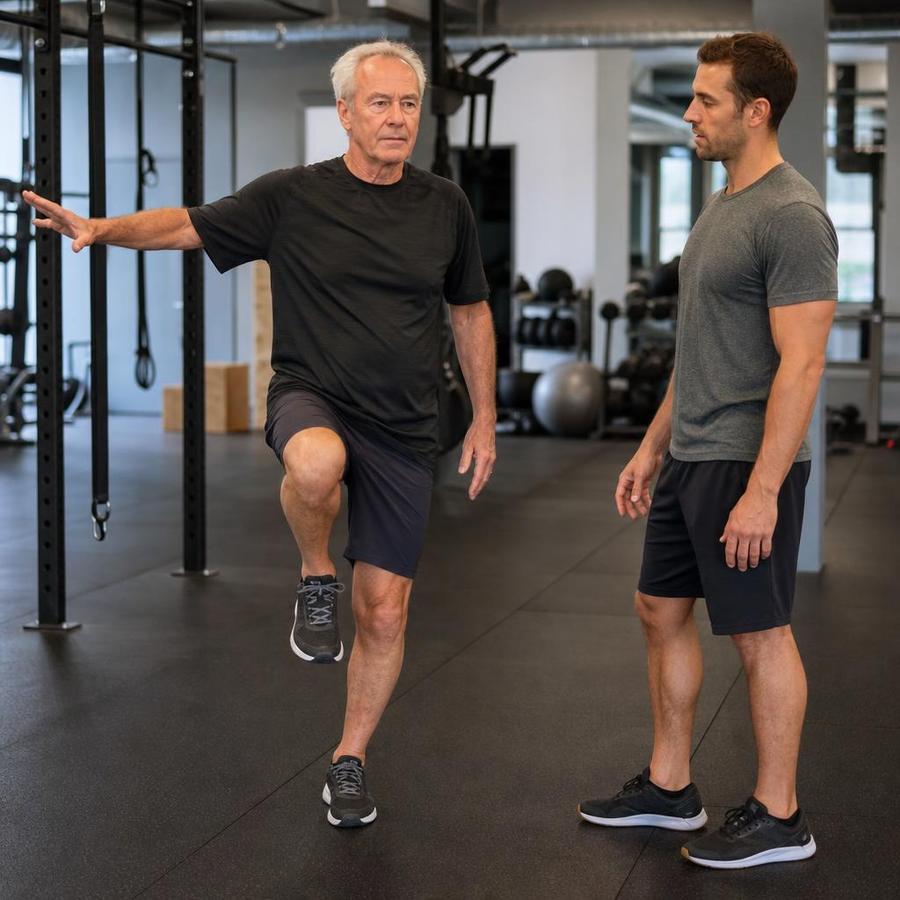
Balance as a training goal, not an afterthought. Most general fitness classes treat balance as a transition or a cooldown gimmick. For older adults, balance training has direct functional consequence. The CDC includes balance work as part of activity that supports function and reduces fall risk. Plan supported single-leg work or controlled reaching where appropriate, with space and something stable within reach. Balance deserves a place in the program before someone has a fall.
Mobility and joint health. Range of motion matters more as tissue gets stiffer. A member returning after a long sedentary period may need more preparation than an experienced regular, regardless of age. Coaches need to know when to slow down and when to give members more time.
Appropriate loading, not no loading. The reflex in many gyms is to give older members the lightest options by default. That’s not coaching. Some members in their 60s are stronger than coaches in their 30s. Ask. Observe. Challenge people at their actual level, not an assumed one. Keep screening and any relevant clinical guidance in the handoff so the coach starts with more than a date of birth.
The Coaching Language Problem
The biggest issue in most group fitness settings isn’t program design. It’s how coaches talk.
“Beginners, elderly, and anyone with injuries, here’s your modification.”
That formula groups people by a label before checking what they need from the movement. It can make a capable member feel written off and leave someone with a specific limitation without enough guidance.
Better approach: coach the movement standard, then offer clear progressions and regressions without labeling who they’re for. “For more challenge, add a hop. To build into this movement, step instead of jump.” That language lets people self-select without being sorted into categories.
Also: tone matters. Coaches who unconsciously adopt a softer, slower, more deferential voice when they’re working with older members are signaling something those members can feel. Talk to them like capable adults. They are.
Specific things to coach your instructors on:
- Don’t assume the modification. Ask about the member’s experience and relevant needs, choose a starting point together and watch how they move.
- Name what the modification builds toward, not away from. “This variation builds the hip stability you need to get to the full movement” is different from “this is easier on your knees.”
- Coach the goal, not the limitation. The goal is function, power, balance, strength. Coach toward that.
Building a 55+ Programming Track That Feels Like Training
If you do want a dedicated offering for older adults, and there’s a good argument for it, structure matters.
Name it for what it does, not who it’s for. “Strength and Function” or “Strong for Life” tells someone what they’ll get. “Senior Fitness” or “55+ Class” leads with demographic identity. The first invites. The second sorts.
Run it at times that make sense, not times that are convenient for the schedule. Mid-morning on weekdays is where most gyms dump older-adult classes because the floor is empty. But that’s also when many older adults prefer to train, so it can work. Just make sure the reasoning is about them, not about your floor utilization.
Staff it with your best coaches. This is a non-negotiable. Members deserve someone who understands the format and can adapt it well. Don’t give this population the newest, least experienced coach because you think it’ll be easy. It won’t be.
Keep the class genuinely challenging. A dedicated older-adult class that doesn’t push anyone isn’t doing its job. Some will have trained hard for years; others will be starting for the first time. Both deserve a progression they can work toward. The class should feel like a real workout.
Bridge it to the main schedule. Members who want to move from a 55+ class into a general class should have a clear path. Others may prefer the dedicated group. Build continuity for both.
The Scheduling and Retention Angle
A dedicated older-adult class can give members a dependable routine and people they look forward to seeing. Ask about availability rather than assuming everyone is retired or free during off-peak hours.
Protect that routine. If you cancel a class members have built their week around, or shuffle a slot without adequate notice, you disrupt one of their reasons to keep coming back.
A few things that work well:
Consistency over novelty. Keep enough consistency for members to practice and see progress. Vary the training where it serves their goals, without changing the coach, format and timetable all at once.
Community as a product. For members who value it, the social component of the class belongs in the experience. Small group sizes that allow for actual connection matter. A coach who knows members’ names, remembers their training goal, follows up on how the previous session felt. Members stay because of that.
Progress they can feel. If members in their 60s and 70s can feel themselves getting stronger, moving better, recovering faster, they’ll stay. If it feels like exercise for the sake of not losing ground, the motivation is harder to sustain. Track something. Celebrate something. Make the progress visible.
A Practical Starting Point
If you have a meaningful number of older members and no real programming for them, start here:
-
Survey them. Ask what they want, what they can’t find anywhere, what would make them train more consistently. They’ll tell you. Leave room for preferences you did not anticipate.
-
Audit what you’re already offering. Can your existing classes serve this demographic with better coaching? Before adding a new class, find out if you’re already leaving them behind in the classes they’re already attending.
-
Invest in coach education. A workshop on aging physiology, functional movement and coaching language is a useful start. Follow it with observed practice and further training where a coach needs it. The learning should show up in general classes as well as a dedicated offering.
-
Add one dedicated class and do it properly. Name it well, staff it well, run it at a time that works for your members. Give it three months. Track attendance and retention for those members. The numbers will tell you what to do next.
Older members are paying for the same care in program design as everyone else. Give them a class with a purpose, a coach who knows what to look for and progress worth coming back for.
The test is simple: did you choose the training because it fits the people in the room, or because it fits your assumptions about their age?
Related reading: Coaching Mixed-Ability Classes | How to Evaluate Your Coaches | The 90-Day Member Journey