
A member asks whether your gym will run XENOM prep. The temptation is to rename a conditioning slot and put a competition graphic on the timetable. But a class built around maximal lifts and gymnastics needs a different coaching and equipment plan from one built around running and shared stations.
The question is timely. Health Club Management reported on October 7 that HYROX founders Christian Toetzke and Moritz Fürste have invested in XENOM and joined its board, while the two brands have a marketing, event-activation and education partnership. That is not an announcement that local gyms are licensed XENOM training centers. XENOM’s own event page lists a Miami competition for December 19–20, 2026 and describes a ten-event, two-day format. A newsworthy race is still not proof that your members want a weekly class.
XENOM prep is not a renamed HYROX circuit
XENOM’s published event list includes a one-rep-max snatch, a heavy clean ladder, wall walks and rope climbs, alongside Echo Bike and ski-erg efforts. The precise competition standards and division requirements matter to an athlete’s preparation, so use the organizer’s current rules when preparing entrants rather than turning a summary into a workout prescription. The practical distinction for a gym is clear: a mixed-skill group cannot safely share one lifting lane, one rig and a coach’s attention as if every event were another timed station.
Our HYROX-style class operations guide deals with sled lanes, machines and rotations. Some of that floor planning still applies. XENOM adds skill and load decisions that deserve their own space and coaching time. A novice learning to set up an overhead lift and an experienced athlete preparing a heavy attempt do not need the same station brief.
Start with the members who are actually asking
Before changing the schedule, ask interested members which event they plan to enter, their training background and which specific skills they want help with. Record the answers and the number willing to book a trial at the proposed time. A few enthusiastic inquiries may justify a workshop or a coached small group rather than a standing class. Do not present a social-media spike as local demand.
If there is enough interest, offer a clearly labeled trial: general competition-prep strength and skill coaching, not an official XENOM program unless you have confirmed the right to use that designation. Check any licensing, brand-use or affiliation terms with the organizer before putting its name on a paid class. Coaches should also be clear that a gym session does not reproduce the race’s full ten-event test.
Build the trial around coaching bandwidth
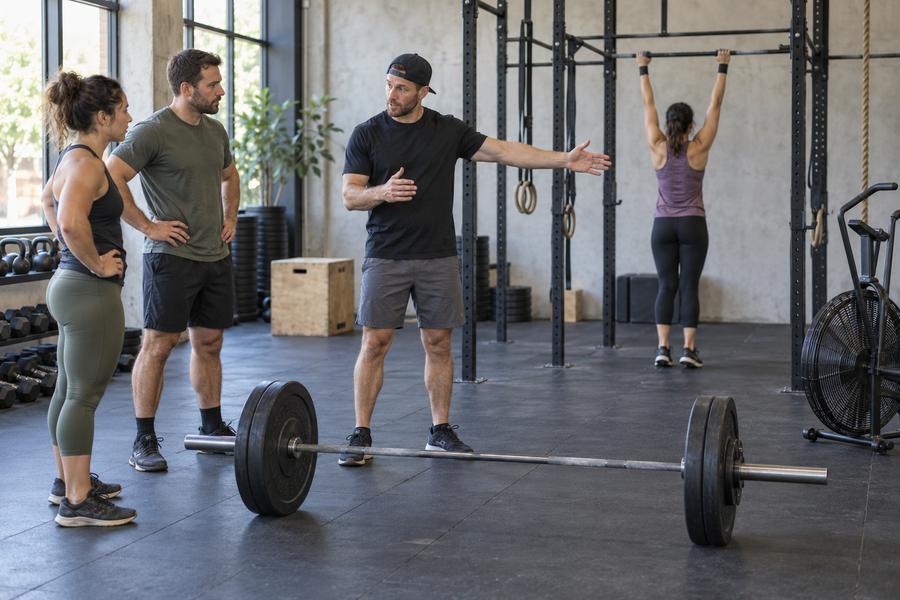
Take one proposed hour and draw the room. Mark the lifting zone and bar storage, the rig, the machine stations and the route between them. Then write down what the coach is observing at each point. If a heavy lift needs close attention, do not schedule an unsupervised gymnastics skill at the same time. Split those elements into separate blocks, add a second qualified coach where warranted, or reduce the cap. A second coach is only useful if their role and sightline are defined.
Give members a skill option that fits the purpose of the session without pretending that a substitute is the same as the race event. Someone who cannot yet do a rope climb can practice an appropriate prerequisite with coaching, but that does not become a rope-climb score. Keep maximal-lift testing out of a general mixed-ability circuit. Plan individual warm-up attempts and supervision if you decide to test at all. If a participant reports pain or concerning symptoms, stop that effort and follow your facility’s response process rather than coaching through it.
Count the scarce kit before setting capacity. One rig position or one ski erg can turn a well-written session into a queue. The shared-equipment class test helps expose bottlenecks, while the practical capacity check asks whether the coach can still see and serve the whole room. A class cap is a coaching decision, not just a square-foot calculation.
Decide after the pilot, not after the announcement
Run a limited trial, then record bookings versus attendance, skill mix, time lost waiting for equipment, coaching interventions and whether existing classes lost members. Ask participants whether they wanted race-specific preparation, general strength coaching or simply a new challenge. Those answers may point to different products. A coach-led skill workshop, a small strength block and an open-gym training plan are not interchangeable.
Use the new-class launch review to decide whether to repeat, revise or stop the slot. CloudFit does not need to be part of this decision: the immediate constraint is qualified observation and usable floor space, not workout display. If demand is thin or the room cannot separate the lifting and gymnastics work, keep the existing schedule and offer interested athletes a more suitable coaching route instead.